







You've probably seen the headlines. "Clinical trials prove frequency therapy works." "68 percent improvement in wellness markers." A study with 5,000 people across 12 countries, somehow never published anywhere a person could actually find it.
We're not going to add to that pile. So this piece skips the fake stats and looks at what real, published research says about the Schumann resonance, what it doesn't say yet, and why the honest version is still worth reading.
The resonance itself isn't in question
Start with the part that's settled science. The Schumann resonance is a real, measurable electromagnetic phenomenon, discovered by physicist Winfried Otto Schumann in 1952. Lightning strikes around the world, thousands of them at any given moment, excite the cavity between the Earth's surface and the ionosphere. That cavity resonates, and the strongest peak sits at roughly 7.83 Hz, with harmonics higher up the scale.
That part isn't up for debate. It's been tracked by researchers for decades. What's still being worked out is what, if anything, that frequency does for the body sitting inside it.
What the human research actually shows
Here's where things get more interesting, and more limited than most wellness blogs let on.
The strongest human evidence so far comes from a small double-blind, randomized trial published in the journal Nature and Science of Sleep in 2022. Researchers tested a 7.83 Hz device against a placebo device in 40 adults with chronic insomnia over four weeks. The group using the active device fell asleep faster and slept longer, measured with polysomnography rather than just a morning survey, and reported better sleep satisfaction. The placebo group felt somewhat better too, but their actual sleep architecture didn't move the same way.
Forty people is not a large trial, and it's one study, not a body of evidence. But it's a real, peer-reviewed, controlled trial, which is more than most claims in this space can point to.
Separately, lab research on human skin cells (not full clinical trials, just cells in a dish) has looked at how brief exposure to a 7.83 Hz field affects cellular activity tied to wound healing. Interesting groundwork, but it tells you about cells, not people, and it isn't something we'd ever stretch into a claim about what a device does for your body.
There's also a long-running observation that the Schumann frequency sits close to the alpha brainwave range, the 8 to 13 Hz activity associated with relaxed wakefulness. Some researchers think that overlap might explain why people report feeling calmer around these frequencies. It's a reasonable hypothesis. It is not proof that one causes the other, and we're not going to pretend otherwise.
What the research does not show
No study, anywhere, has shown that Schumann resonance exposure treats, cures, or diagnoses a medical condition, and no legitimate researcher is claiming that. Anything you read about "boosting immune function" or "reversing disease" through frequency exposure is going well past what the data supports. We'd rather tell you that plainly than dress it up.
The honest summary looks like this: the science is real, early, and promising in a narrow way, mostly around sleep and subjective calm. It is not a substitute for medical care, and it was never designed to be one.
So why do people report feeling something?
We get asked this a lot, and it's a fair question. Our honest answer is that we can't rule out a placebo effect entirely. Expectation is powerful, and it plays a role in almost every wellness intervention that exists.
What keeps us paying attention anyway is the pattern people describe with pets. Dogs that were pacing at 2 a.m. settle. Cats gravitate toward the corner of the room where the device sits. Animals don't know what a Schumann resonance generator is supposed to do, and they don't have expectations to fulfill. That doesn't prove anything scientifically, but it's a detail that's hard to explain away with placebo alone.
Where this leaves the device
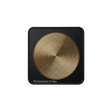
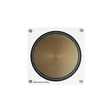
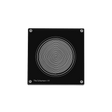
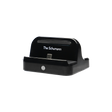
Our devices produce a real, low-frequency electromagnetic field, not sound. There's nothing to hear and nothing to feel switching on, in the same way you can't feel your phone's signal even though it's there. The effect people describe is usually gradual and cumulative rather than a light-switch moment, and we'd rather set that expectation honestly than oversell a first night.
We're not a medical device, and we don't market one. What we are is a precision-engineered tool, CE, FCC, and UKCA certified, built for people who take their sleep, focus, and recovery seriously enough to want the environment working with them instead of against them. If you're curious whether it fits your routine, our 30-day money-back guarantee means the risk of finding out sits with us, not you.
The bottom line
Frequency wellness is a young field. The strongest study we can point to involved 40 people over four weeks, not thousands over years. That's not a weakness we're going to hide behind vague language or invented numbers. It's just where the science actually stands right now, and we think readers can tell the difference between a company that says so and one that doesn't.
We'll keep tracking new research as it publishes, and we'll keep updating what we tell you here. If the evidence gets stronger, you'll hear about it from us in the same plain terms. If it doesn't, you'll hear that too.

