







A lot of what gets written about "the future of frequency medicine" is fiction dressed up as forecasting. Quantum sensors, AI-mapped bio-resonance, hospitals running frequency departments by 2030. None of it is real, and we're not going to pretend otherwise. We're not a medical device, we don't diagnose or treat anything, and that isn't changing.
What's real is quieter. Tim, our founder, spent years as a professional ballet dancer before a Crohn's diagnosis sent him looking for answers that conventional medicine and the usual biohacking playbook hadn't given him. That's not a marketing anecdote we added later. It's the actual reason this category exists in its current form, at least on our side of it. He brought the idea to Mark, his best friend and now our CFO, and what started in a living room in 2019 has slowly turned into something closer to a connected ecosystem than a single gadget on a nightstand.
Here's what that shift actually looks like from where we sit, building the devices, not writing about them from the outside.
From a Single Frequency to a Programmable Range
The first Schumann resonance generator did one thing. Reproduce 7.83 Hz, and nothing else. That's still what the V1 Classic does, on purpose, for people who want the core experience without a settings menu to think about.
Where things have moved is the range above it. The Schumann V2 Pro and Schumann V3 Max are programmable across a broader band, which means a schumann frequency generator today can be tuned for different parts of the day instead of running one fixed setting around the clock. That's probably the clearest trend in this category right now, and it's the direction the rest of the range keeps following.
Where the Evidence Conversation Is Actually Heading
The honest answer to "does this work" hasn't changed, and it probably won't change quickly. There's no clinical trial proving a schumann resonance frequency cures anything, because it isn't designed to. Any article claiming otherwise isn't being straight with you.
What is shifting is the quality of the conversation around it. Five years ago, almost everything written about this space leaned entirely on anecdote. There's now a slower, more careful interest from people in sleep science and neurofeedback, sitting alongside the anecdotal reports that started the whole category in the first place. That's not a breakthrough. It's just a more honest kind of progress than a headline about reversing aging.
One observation keeps holding up better than most, and it's the one we mention more than any study. Animals respond to an active device without any expectation to fulfill. Anxious dogs settle. Cats gravitate toward the room. That won't satisfy a peer reviewer. But as a data point while the formal research catches up, it's a genuinely useful one, and it's the kind of thing a customer notices long before we do.
The Signals That the Category Is Actually Maturing
Not every "frequency wellness" brand is moving in the same direction, and it's worth knowing what to actually look for if you're comparing options beyond just us. The signals that a brand is maturing rather than just growing tend to be the same ones, again and again:
-
Certification you can verify, not just claim (CE, FCC, UKCA, or an equivalent)
-
Language about cumulative, subtle effects instead of instant results
-
A willingness to say "we don't know that yet" instead of inventing a study
-
Environmental or community commitments that predate the need for good marketing
-
Programmable ranges replacing single-gimmick SKUs
None of that is exciting to write about. But it's a far more useful checklist than anything involving the word "revolutionary."
The Weak Version of This Industry, and Why We'd Rather Not Be It
We'll say this plainly. A lot of this category is still selling vague "healing frequencies" with a nice logo and no certification behind them at all. That's an easy business to run and a hard one to trust.
Before anything gets added to our programmable range, the team asks one blunt internal question: would we want this running in our own kids' bedroom overnight? If the honest answer is "we're not sure," it doesn't ship. That's not a slogan. It's the actual filter, and it's slower than just launching whatever tests well.
We'd rather be the boring, certified option than the exciting, unproven one. So far, that's held up fine.
The Range Is Widening, Not Just the Frequencies
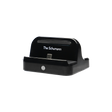
A schumann wave signal generator used to mean one box on a bedside table. The direction now includes accessories built around the same principle, an EMF shield, a frequency water bottle, a charging station, which points at something bigger than a single product. Most of that lineup exists because customers asked for it. Every product we've shipped has come out of feedback from the people actually using the last one, which is a slower way to build a range but a more honest one.
That's also shown up in the community itself. What started with one device is now a global group of athletes, biohackers, executives, and parents who arrived here for very different reasons and stuck around for oddly similar ones. A category that began as a niche curiosity is quietly becoming a normal part of how a certain kind of person thinks about sleep and focus, sitting right alongside training, diet, and everything else they already track.
The Part That Will Not Change
Whatever the range looks like in two years, a few things aren't up for negotiation. No medical claims. No fear-based EMF messaging. No pretending a subtle, cumulative effect is a switch-flip fix. This category has enough noise in it already, and the honest version of "the future of frequency technology" is a genuinely boring one: better engineering, verifiable certification, wider programmable ranges, and devices that describe themselves accurately instead of chasing a headline.
We built the first one in a living room. Whatever comes next will look different. That standard won't.

