







Type "schumann resonance generator" into Google and you will land on two very different kinds of pages. One treats 7.83 Hz like a proven medical intervention. The other treats it like a hoax that does not exist at all. Neither one is quite right, and if you are trying to decide whether a schumann wave generator belongs in your bedroom or your office, you deserve a straighter answer than either extreme gives you.
So here is the straighter answer. The Schumann resonance is real and well documented. What it does for your body is a mix of solid physics, reasonable inference, and a fair amount of wellness-industry guesswork dressed up as certainty. We will separate those three things out, then walk through what our own devices actually do and why we built them the way we did.
The physics behind the number

The Schumann resonance was first predicted by physicist Winfried Otto Schumann in 1952. It is not a metaphor and it is not a brand name. It is a real electromagnetic standing wave that forms in the cavity between the Earth's surface and the ionosphere, generated mostly by the roughly 50 lightning strikes happening somewhere on the planet at any given moment.
The fundamental frequency sits close to 7.83 Hz, though it drifts slightly through the day and across seasons as the ionosphere rises and falls. Harmonics follow at roughly 14.3 Hz, 20.8 Hz, 27.3 Hz, and 33.8 Hz. NASA and independent researchers have measured and mapped these resonances using induction coil magnetometers at electromagnetically quiet observation sites around the world, and the amplitude of that signal is tiny, in the picotesla range.
That part is settled science. What is less settled is what this specific frequency does to a human nervous system, and that is where most articles on this topic start overreaching.
The astronaut story everyone repeats (and what NASA actually documented)
You will see a version of this story on almost every schumann resonance device site. Astronauts leave Earth's electromagnetic environment, they develop sleep problems and immune issues nobody predicted, and someone eventually connects the dots back to the missing 7.83 Hz signal.
It is a good story. It is also thinner than it sounds once you dig into the sourcing. NASA's actual, documented relationship with the Schumann resonance is mostly about remote sensing, detecting and tracking the resonance from orbit and from ground stations, not about validating a therapeutic device for astronaut health. The idea that isolation from 7.83 Hz explains specific space-flight health issues is a popular interpretation that has circulated in wellness circles for years. It is plausible, and Earth's electromagnetic field is genuinely different from what a spacecraft interior provides, but "plausible and repeated often" is not the same as "confirmed."
We think that is worth saying plainly, rather than letting you find it out from a skeptic's blog post later.
What is actually happening inside one of these devices

A Schumann frequency generator is a device that recreates that low-frequency electromagnetic field indoors, using a coil rather than lightning. It is worth being precise here, because this is where most articles on this topic confuse people: the field is electromagnetic, not acoustic. There is no audio and no vibration, nothing to hear or feel directly, the same way you cannot hear or feel your phone's signal even though it is there. Ours use a Mobius coil design, which cancels most of the magnetic field while preserving the electric component, the same basic approach used in a lot of research-grade frequency equipment.
Most other frequency devices on the market are tethered to a wall outlet, or they play an audio track through headphones and call it a "frequency," which is a fundamentally different mechanism from an actual electromagnetic field. Ours run on battery power and stay completely silent, which is a combination that is genuinely uncommon in this category. You can move the device with you, and there is nothing to hear.
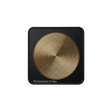
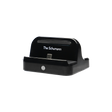
The Schumann V1 Classic is the simplest device in the range, a fixed 7.83 Hz output meant to sit in the background of a room the way ambient light does. No screen, no settings to learn. It covers less ground than the V2 Pro or V3 Max by design, built for someone who wants the baseline resonance running and nothing else to think about.
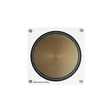
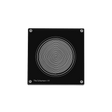
The Schumann V3 Max is the flagship, built for anyone who wants full control over their frequency use. It covers 0.1 Hz to 9999.99 Hz in 0.01 Hz steps, with dual sine and square waveform output, up to 24 hours of battery life, five custom preset buttons, and a quick-set button for jumping straight to a saved frequency without digging through a menu. The Schumann V2 Pro sits between the two, a tunable schumann wave signal generator covering 0.01 Hz to 999.99 Hz for anyone who wants some flexibility without the full V3 Max feature set.
|
Device |
Frequency range |
Best for |
|
Schumann V1 Classic |
Fixed 7.83 Hz |
Set-and-forget background use, simplest setup |
|
Schumann V2 Pro |
0.01 to 999.99 Hz, sine and square wave |
Some flexibility without the full feature set |
|
Schumann V3 Max |
0.01 to 9999.99 Hz, dual waveform, up to 24 hours battery life, 5 custom presets, quick-set button |
Full control, targeted protocols, professional and high-level use |

If you are shopping for a Schumann resonance generator for the first time, the honest advice is to start with the V1 Classic. It covers less ground than the V2 Pro or V3 Max, and that is the point: one frequency, running continuously, nothing to configure. Once you want to work with a specific frequency or build out a real protocol, the Schumann V3 Max is the one built for that, with the range, waveform options, battery life, and preset buttons to support it.
Why 14.1 Hz shows up in so many searches
A lot of search traffic lands on 14.1 Hz specifically, so it is worth being precise about it. The second Schumann harmonic sits closer to 14.3 Hz in most published measurements, and 14.1 Hz is the figure some wellness content and some devices use as a rounded, practical setting in that same neighborhood.
That range sits near the boundary between alpha and beta brainwave activity, the state most people associate with alert, focused wakefulness rather than the deep relaxation associated with the 7.83 Hz fundamental. People who reach for a frequency around 14 Hz generally report wanting something closer to sharper focus or a mental "wake up" than a calming effect. That is a reasonable, physiologically plausible target. It is not the same as a clinically proven outcome, and we are not going to pretend otherwise just because it makes for a punchier headline.
What the current research actually shows
This is a fast-moving field, and it helps to know which parts of the picture are locked down and which parts are still being explored.
What is reasonably well supported: the Schumann resonance is a real, continuously present, low-intensity electromagnetic signal that living organisms have existed alongside for the entire history of life on Earth. The World Health Organization's review of extremely low frequency field exposure and the International Commission on Non-Ionizing Radiation Protection guidelines both place typical low-level ELF exposure, the same broad category our devices sit in, well within established safety limits. Average residential ELF exposure in homes already runs higher than what a Schumann device adds.
Research connecting specific frequency exposure to areas like cellular activity, immune signaling, and cognitive performance is still developing, and it is one of the more interesting directions the field is heading. Some of that early work shows up in peer-reviewed electromagnetic biology research, though it is not yet tied to a specific consumer device or a specific protocol. We keep an eye on where that research goes, and we would rather stay honest about the pace of the science than pretend every question already has a settled answer.
That is the standard we hold this article to, and it is one we will keep holding ourselves to as more dedicated research becomes available.
Who actually buys one of these, and why

In practice, most people buying a Schumann resonance device are not expecting an overnight transformation. They are trying to add one more input to an environment that has gotten unusually far from anything resembling the outdoors: fluorescent lighting, concrete, glass, and a phone within arm's reach at all times. A continuous 7.83 Hz field running in the background is a low-effort way to bring one small piece of that natural electromagnetic environment back into a bedroom or office, alongside things like actual time outside, which still does more for most people than any device will.
If you have a diagnosed medical condition, talk to your doctor before using any frequency device. This is a wellness tool, not a medical device, and we are not making claims otherwise. That is the accurate way to describe what this product is for, not a disclaimer bolted on to cover ourselves.
Buy it for what it is, not what it promises
The frequency is real. The physics behind it is not in dispute. What is still genuinely open is how much a consumer device recreating that signal changes day-to-day wellbeing, and anyone telling you that question is fully settled, in either direction, is selling you certainty the research does not have yet. We would rather you buy a Schumann V1 Classic or V2 Pro knowing exactly what is proven, what is plausible, and what is still just a good story, than buy in on hype and feel misled six months later.

