





If you’ve spent any time near wellness content, you’ve met them. A playlist titled “528 Hz love frequency.” A video promising that 396 Hz releases guilt and 741 Hz clears out toxins. The tones are called Solfeggio frequencies, and they’re usually described as ancient, sacred, and powerful.
Some of that story holds up, and some of it doesn’t. So where do the numbers come from, and what does the research say? We’ll walk through both, including the popular claim that 528 Hz repairs DNA. We’ll also be straight about where this leaves a company that makes programmable frequency devices, because it’s a fair question.
Where the Numbers Actually Come From
The word part is genuinely old. Around the 11th century, the music theorist Guido of Arezzo named the notes of a scale using the first syllable of each line of a Latin hymn to St. John the Baptist. Ut, re, mi, fa, sol, la. That’s where do, re, mi comes from, and it’s a lovely bit of musical history.
The frequency part is much younger. The specific numbers (396, 417, 528, 639, 741, and 852 Hz) trace back to an herbalist named Joseph Puleo, who said he found them by applying a number reduction method to verse numbers in the Book of Numbers. Three more tones (174, 285, and 963 Hz) were added later. The set was popularized in Healing Codes for the Biological Apocalypse, a 1999 book by Leonard Horowitz that tells Puleo’s story. Musicologists haven’t found evidence that medieval singers tuned their chants to these values, and stories about the tones being lost or suppressed over the centuries don’t have documentation behind them either.
There’s a telling detail in the math. Add up the digits of each number and keep going until you have one digit left, and every Solfeggio frequency lands on 3, 6, or 9. That tells you the list came out of numerology rather than acoustics or music history. There also wasn’t an agreed pitch standard in the 11th century, so there’s no original frequency to recover in the first place.
The Research That Does Exist
528 Hz is the one tone that has gotten some scientific attention, so it deserves a fair hearing. In a 2018 pilot study, nine healthy adults (one man and eight women) listened to the same soothing piano music tuned to 528 Hz on one day and to the standard 440 Hz on another. Saliva samples showed cortisol dropping after the 528 Hz version and oxytocin rising, and the authors concluded it reduced stress after only five minutes.
That’s interesting. It’s also nine people, published in a small journal, and it hasn’t been independently replicated. A larger randomized trial split 162 university students into three groups during exam season. One group heard no music, one heard music at 528 Hz, and one heard music at 432 Hz, each for 20 minutes. The groups showed different patterns in some saliva markers, but no difference on a cognitive test. Again, these are short term lab markers, not changes in how anyone’s health turns out.
A fair summary, then. Music is often relaxing, and music tuned to 528 Hz appears to have been calming in a couple of small experiments. Nobody has shown that 528 Hz is reliably special compared with other pleasant music, and the question is still open.
Why “528 Hz Repairs DNA” Doesn’t Work
This is the claim that does the most damage, because it sounds scientific. DNA repair is something your cells do constantly using specialized enzymes, through well studied pathways with names like base excision repair and mismatch repair. We’re not aware of any study showing that a tone changes any of that in a living person, and there’s no known mechanism by which pressure waves in air at one pitch would do it. The idea traces back to numerology, not to a lab. Repeating it doesn’t make it a finding.
Sound Is Not an Electromagnetic Field
This part matters most for us. Every study above involved audible sound, meaning vibrations in air that you hear through your ears. The Schumann devices don’t make sound. They generate a low frequency electromagnetic field, silently, the way your phone’s signal exists whether or not you can sense it.
Those are different physical things. So even if the music research holds up completely, it says nothing about what an electromagnetic field does, and nothing about a device like ours.
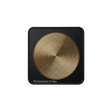
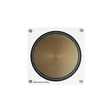
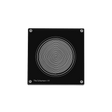
The V1 Classic produces a steady 7.83 Hz field, matching the Earth’s own natural resonance. The V2 Pro and V3 Max are programmable, so someone who wants to experiment can run the Solfeggio tones or anything else in their range. Our Frequency Library lists the uses each tone is traditionally associated with. Those associations come from the traditions around the numbers, not from clinical trials, so we’d encourage you to treat them as a starting point for your own experimenting rather than as health promises. People tell us they feel calmer and find it easier to wind down. That’s an experience people report, and it varies from person to person.
How to Size Up Any Frequency Claim
A few questions cut through most of the noise. Who measured the effect, and in how many people? What was it compared against? Was the thing measured a health outcome, or a lab marker? Does the explanation involve a real mechanism, or just a number that sounds meaningful? And does one tone supposedly do everything from pain to relationships to DNA? When a single frequency covers that much ground, it’s usually a sign the evidence is thin.

