







In 1952, a German physicist named Winfried Otto Schumann worked out something odd on paper. The space between the Earth's surface and the ionosphere, the electrically charged layer of atmosphere roughly 50 to 600 miles up, forms a kind of cavity. Lightning strikes, happening somewhere on the planet roughly a hundred times every second, send electromagnetic waves into that cavity. Schumann's calculations showed those waves should reinforce each other at a specific, predictable frequency, close to 7.83 Hz, with weaker harmonic peaks around 14, 20, 26, and 33 Hz.
It was a prediction on paper until 1960, when researchers measured it directly and confirmed he was right. The Schumann resonance is real, a continuous, extremely faint electromagnetic hum, generated by the planet's own weather, present everywhere on Earth for as long as there has been an atmosphere and lightning to charge it.
A Frequency Older Than Every Living Thing
Here is the part that makes the discovery interesting beyond geophysics. That 7.83 Hz hum has been present through nearly the entire history of life on Earth. Every organism that has ever existed developed inside it, whether or not anything was listening.
That raises a genuinely reasonable question, and researchers have taken it seriously rather than dismissing it. Does a signal this constant, this old, and this universal actually matter to biology, or is it just background noise too weak to register.
What the Isolation Research Actually Shows
The most cited data point on this question comes from Rütger Wever's studies at the Max Planck Institute for Behavioral Physiology, running from the 1960s through the 1980s. Volunteers lived for weeks at a time underground in a research bunker in Andechs, Germany. One experimental room was fully shielded from natural electric and magnetic fields, including the Schumann resonance. The other was not. Wever's published results found that subjects in the shielded room showed a shorter, less stable circadian period than those in the unshielded room, and that reintroducing a weak artificial field appeared to help resynchronize their rhythms.
It is worth being honest about what this research is and is not. It is decades old, it involved a modest number of subjects, and it has not been independently replicated using modern chronobiology methods. Mainstream sleep science today attributes circadian regulation overwhelmingly to light exposure, not electromagnetic fields. What the bunker studies genuinely offer is a narrow, interesting data point. When researchers stripped a room of every natural time cue, including the planet's ambient field, human rhythms did not hold as steady. That is a reason for curiosity and further research, not a settled verdict, and it deserves to be described that way rather than oversold.
More recently, the question has moved into more rigorous, modern trial design. A 2022 randomized, double-blinded study published in Nature and Science of Sleep tested a Schumann-resonance sleep device against a matched placebo device in 40 adults, using both sleep diaries and overnight polysomnography. The active-device group showed measurable improvements in objective sleep measures that the placebo group did not, while both groups reported some subjective improvement, a pattern the researchers describe as promising but in need of further replication before any firm conclusions.
What NASA Is Actually Asking
The popular version of this story claims NASA solved this decades ago and quietly installed Schumann resonance generators on every spacecraft. That specific claim does not hold up. NASA has not confirmed using anything of the kind, and no public documentation supports it.
What NASA has actually done is more modest and, honestly, more interesting, because it treats the question as open rather than answered. A 2023 white paper submitted to NASA's Biological and Physical Sciences division points out that because the Schumann resonance is present everywhere on Earth, it is genuinely difficult to study what happens in its absence. As NASA plans longer missions to the moon under the Artemis program, the paper argues that this question, how biological systems behave without the Schumann resonance, deserves dedicated research rather than assumption in either direction. In other words, this is an active, unresolved area of scientific curiosity. NASA is asking the question. Nobody has published a confirmed answer.
A Frequency That Moves, Within Limits
The Schumann resonance is not a single, unmoving tone. Its intensity and, to a smaller degree, its exact frequency shift with solar activity, time of day, and the season, since thunderstorm activity migrates around the globe as different regions move into their storm seasons. Research groups, including Stanford's Very Low Frequency group, have mapped these patterns in detail, tracking how the resonance's amplitude varies by time of day and even tracks the roughly monthly solar rotation cycle. It is a dynamic system that stays remarkably stable around its fundamental frequency even as the inputs driving it constantly shift.
The More Familiar Problem, Closer to Home
The irony is that while researchers have spent decades asking whether astronauts might be missing this signal in space, most people on Earth have quietly built their own version of the same isolation without leaving the planet. Steel reinforced concrete, dense electrical wiring, and the general electromagnetic clutter of a modern connected building all attenuate the natural Schumann signal the way a Faraday cage would. You have not left Earth's electromagnetic environment. Modern construction has just made it harder for your body to receive it.
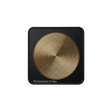
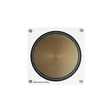
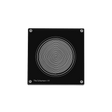
That is the premise behind The Schumann's approach: not to prove a settled scientific case that does not yet exist, but to add back a coherent, natural signal that most modern rooms have quietly filtered out. The V1 Classic generates a continuous, silent 7.83 Hz field, meant to sit in a room and restore that ambient baseline. The V2 Pro and V3 Max extend that into a wider, programmable range for people who want more control over the setup. None of these devices are being sold as a validated match to any specific brain state or sleep stage. The honest version of the claim is simpler: a real, measurable low frequency field, present in the room again, alongside the more established basics of light and routine that carry the strongest evidence for supporting rest and calm.

