






In 1952, a German physicist named Winfried Otto Schumann was working through a fairly abstract question at the Technical University of Munich: if the space between Earth's surface and the ionosphere behaves like a spherical cavity, what happens to electromagnetic waves traveling through it? His math predicted something specific, a set of resonant frequencies that should exist everywhere on the planet, with a fundamental frequency in the extremely low range. It took about a decade for instruments to catch up to the theory. In 1960, researchers using a large antenna at MIT measured it directly, confirming what's now called the Schumann resonance: a real, continuously present electromagnetic pulse at roughly 7.83 Hz, generated by the roughly 50 lightning strikes happening somewhere on Earth every second, their waves trapped and reinforced in the cavity between the ground and the ionosphere.
This isn't a fringe or speculative idea. It's documented atmospheric physics, and NASA has its own plain explanation of it: a repeating atmospheric heartbeat, present continuously, that scientists use to study weather, the atmosphere's electrical behavior, and even the composition of gases in the air. What's genuinely interesting, and still actively researched rather than settled, is the question of whether this constant background field matters to biology, not just geophysics.
Where 7.83 Hz sits in your own brain activity
Your brain produces electrical activity across a range of frequencies, and different ranges correspond to different mental states: delta waves (roughly 0.5 to 4 Hz) dominate deep sleep, theta waves (4 to 8 Hz) show up during meditative and drowsy states, alpha waves (8 to 13 Hz) characterize calm, relaxed focus, and beta waves (13 to 30 Hz) reflect active, engaged thinking. The Schumann resonance's fundamental frequency sits almost exactly at the boundary between theta and alpha, the transition zone between drowsy stillness and relaxed alertness.
Whether that overlap is meaningful or coincidental is a genuinely open question in the research, and we think it's worth saying so plainly rather than presenting it as proven. It's a reasonable, interesting hypothesis, not a settled mechanism.
What happens when the field is removed?
The most cited data on this question comes from Rütger Wever's studies at the Max Planck Institute for Behavioral Physiology, run between the 1960s and 1980s. Volunteers lived for weeks at a time in an underground bunker, with one experimental room shielded from natural electric and magnetic fields and another left unshielded. Wever's published findings showed that subjects in the shielded room had a shorter, less stable circadian period than those in the unshielded room, and that introducing a weak artificial field appeared to help resynchronize their rhythms.
It's worth being direct about the limits of this research. It's decades old, involved modest sample sizes, and hasn't been robustly replicated using modern methods, and mainstream sleep science today attributes circadian regulation mostly to light exposure rather than electromagnetic fields. What the bunker studies offer is a genuinely interesting, if narrow, historical data point rather than proof of a mechanism, and that's the honest way to describe it.
More recently, the question has moved into more rigorous, modern trial design. A 2022 randomized, double-blinded study published in Nature and Science of Sleep tested a Schumann-resonance sleep device against a matched placebo device in 40 adults, using both sleep diaries and overnight polysomnography. The active-device group showed measurable improvements in objective sleep measures that the placebo group didn't, while both groups reported some subjective improvement, a pattern the researchers describe as promising but in need of further replication before any firm conclusions. It's one study, and we'd rather point to it honestly, real, peer-reviewed, and still early, than inflate what a single trial can tell us.
As for space travel, NASA has treated the absence of Earth's field during long missions as a genuinely open research question rather than a solved one. A 2023 white paper submitted to NASA's Biological and Physical Sciences division points out that because the Schumann resonance is so difficult to shield against even in dedicated research facilities on Earth, its absence during spaceflight has been hard to study directly, and argues that as NASA plans longer lunar missions, this deserves dedicated investigation. That's a more accurate picture than the idea that this question was solved decades ago: it's an active, unresolved area of interest, not a finished chapter.
A modern environment that's quietly filtered the signal out
None of this requires imagining electromagnetic fields as universally dangerous or universally necessary. It's simply true that the built environment most of us live in filters out Earth's natural field far more than it did even a century ago. Steel-reinforced concrete and dense electrical wiring attenuate the Schumann resonance the way a Faraday cage would, and most people now spend the overwhelming majority of their time indoors, layered with Wi‑Fi, cellular signals, and countless connected devices that share no relationship with that natural frequency.
That's not the same as saying those artificial signals are harmful at normal exposure levels; the International Commission on Non-Ionizing Radiation Protection sets exposure guidelines specifically because frequency and intensity determine biological relevance, and household electronics generally fall well within them. The more interesting question isn't danger. It's coherence: whether an indoor environment that has quietly lost its one natural, steady electromagnetic reference point is worth restoring, separate from any question of artificial signals being unsafe.
What restoration looks like
This is the idea behind The Schumann's device lineup: rather than trying to block or shield against modern electromagnetic exposure, which is both impractical and not something a small consumer device can meaningfully do, add back the one natural signal that's been filtered out.
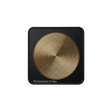
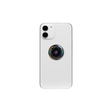
The V1 Classic is the simplest version of that idea: a continuous, silent 7.83 Hz field, meant to be placed in a bedroom or workspace and left running in the background. There's no sound or vibration, nothing to feel directly, similar to how you don't sense your phone's signal even though it's constantly present. People who use it commonly describe an easier time settling in the evening and a clearer, less foggy start to the day, and as with any wellness product, we'd rather describe that as a common experience than promise it as a guaranteed outcome.
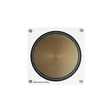
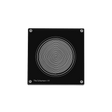
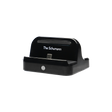
The V2 Pro extends this into a programmable, mid-tier device covering a wider frequency band for people who want to experiment beyond the fixed baseline, and the V3 Max, our current flagship, goes further still, fully programmable up to 9,999.99 Hz, with presets you can set once and return to for different parts of the day. Together with the V1's continuous baseline, the combination gives people a foundation plus room to personalize.
For exact specs and current pricing, theschumann.com is always the most accurate source, since the lineup continues to evolve alongside a next-generation device already in development.
Where this leaves you
The Schumann resonance itself isn't in question. It's measured, published, real physics, confirmed independently many times over since 1960. What remains genuinely open is how much it matters to human biology day to day, and that's a question we think is more interesting addressed honestly than oversold. The historical isolation research is suggestive. The newer clinical trial is encouraging and small. The space research is an active question NASA itself says needs more study, not a closed case.
What we're confident in is simpler: modern indoor life has filtered out a natural signal that was present for the entirety of human evolution, and restoring it, quietly and continuously, is a reasonable thing to try, backed by real if still-developing science, without needing to overstate what any single study proves.

