










Your body runs on a clock it did not choose and cannot fully ignore. Every cell carries a set of genes that cycle on roughly a 24 hour loop, and a small cluster of neurons in your brain keeps that loop synced to the actual rotation of the planet. When your daily habits work with that clock, most people notice it. When they fight it, they usually notice that too, in the form of grogginess, a flat afternoon, or sleep that never quite lands.
That is the real story behind "frequency alignment." It is worth separating from an older, softer version of the same claim, which was that Earth emits some kind of frequency your day should sync to. Earth does have a measurable electromagnetic pulse, the Schumann resonance, and we have written about what the research on that actually shows elsewhere. But the clock that runs your energy, focus, and sleep is set almost entirely by something simpler and better studied: light.
How Your Internal Clock Actually Gets Set
The master clock sits in a region of the hypothalamus called the suprachiasmatic nucleus, or SCN. It takes its main cue from light hitting the retina, which is why people who are blind, or who spend weeks somewhere with no natural light, often see their sleep and wake times drift.
Every organ has its own smaller clock too, and those peripheral clocks take cues from food, temperature, and activity as well as light. Line all of them up and the whole system runs efficiently. Let them drift out of sync, through jet lag, shift work, or a phone at 1am, and the mismatch shows up as fatigue that sleep alone does not fix.
Morning Light Does More Than Wake You Up
The clearest, most reproducible timing effect in this research is morning light exposure. A study from the University of Chicago and the Université Libre de Bruxelles put healthy men through a night of dim light versus a three hour block of bright light between 5am and 8am, then tracked cortisol, melatonin, and alertness. The study, published in the Journal of Clinical Endocrinology and Metabolism, found that the early morning bright light produced an immediate rise of more than 50 percent in cortisol and noticeably limited the drop in alertness that usually follows a poor night of sleep. Afternoon light, given under the same conditions, did nothing measurable to either hormone.
Later work has narrowed this further. A systematic review of the light wavelength research found that bright light in the early morning, particularly light with more blue and green wavelength, produces a larger cortisol response than warmer, red-shifted light at the same intensity. In plain terms, stepping outside shortly after waking, before reaching for sunglasses or staying under warm indoor lighting, appears to do more for daytime alertness than the same light later in the day.
Evening Light Works the Other Direction
The same mechanism runs in reverse at night. Bright light close to bedtime delays the internal clock rather than advancing it, pushing back the natural rise of melatonin and, in some studies, shifting the timing of cortisol as well. Researchers studying artificial light at night have found that a few hours of ordinary indoor lighting before bed is enough to measurably delay these rhythms.
None of this requires blackout curtains or a total ban on screens. It just means the lighting choices that make the biggest difference are the ones closest to waking and closest to sleeping, not the ones in the middle of the day.
Meal Timing Follows the Same Clock
Light sets the master clock in the brain, but food sets the smaller clocks in the liver, gut, and fat tissue, and the two do not always agree with each other when meals run late. A narrative review on early mealtime and metabolism found that eating later in the day is associated with a higher rate of metabolic problems, while an earlier eating window, an earlier breakfast paired with an earlier dinner, tends to improve blood glucose control.
A separate literature assessment of time restricted eating trials found that starting the first meal before roughly 10:30am showed a larger benefit for insulin resistance than starting after 11:30am, though the researchers were clear that most trials did not account for individual chronotype, which likely explains some of the variation between studies.
None of this means a rigid feeding window is required. It means the timing of the first and last meal of the day carries more metabolic weight than most people assume, and shifting both earlier, even by an hour, is a low effort change with real evidence behind it.
|
Window |
What the research points to |
|
First 30 to 60 minutes after waking |
Bright, ideally outdoor light supports the natural cortisol rise linked to morning alertness |
|
Mid morning to early afternoon |
The body's most metabolically efficient window for the day's largest meals |
|
Two to three hours before bed |
Dimmer, warmer light supports the natural melatonin rise instead of delaying it |
Where This Connects Back to the Schumann Resonance
The light-driven clock and the Schumann resonance are two different things, and it does the research no favors to blur them together. Light entrainment is well established, repeatable, and mechanistically understood down to the level of specific retinal cells. The Schumann resonance is a genuinely interesting but much earlier stage of research, one where scientists have found overlap with human brainwave patterns without yet nailing down what, if anything, it changes day to day.
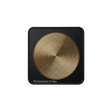
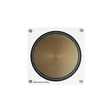
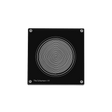
Where the two connect is in the bigger pattern. Modern indoor life has quietly dimmed both signals at once, the natural light-dark cycle and the natural electromagnetic backdrop humans evolved inside. Getting outside in the morning fixes the first. A device that reintroduces a steady 7.83 Hz field into a bedroom or workspace, like our own V1 Classic, addresses the second. They are not the same intervention and we would rather say that plainly than fold them into one tidy claim.
A Simpler Way to Think About Your Day
You do not need a rigid schedule to benefit from any of this. Getting outside within an hour of waking, eating your two largest meals earlier rather than later, and dimming the lights in the hours before bed cover most of what the research actually supports, without needing an app, a tracker, or a strict protocol. Add a consistent wind down routine, and a quiet reintroduction of Earth's natural frequency field through the evening, and you are working with your biology on two fronts instead of one.
The honest summary is less dramatic than "align with Earth's frequency and transform your life," and that is precisely why it holds up. Morning light, earlier meals, and dimmer evenings are unglamorous, well studied, and free. Everything past that, including the Schumann resonance itself, is worth paying attention to, but worth describing as promising and still developing rather than proven.

