








Your cells are talking to each other right now, and most of that conversation has nothing to do with the chemistry lessons you sat through in school.
For most of the twentieth century, biologists assumed cellular communication ran almost entirely on chemistry. A hormone drifts through the bloodstream. A neurotransmitter locks into a receptor. Information moves the way a letter moves through the mail, slow, physical, one molecule at a time. That picture is still true. It's just not the whole picture.
Over the past two decades, a field called quantum biology has built a case that some of life's most important processes lean on electromagnetic and quantum effects too, not instead of chemistry, but alongside it. And sitting at the edge of that research is a strange, steady hum most people have never heard of: the Schumann resonance, Earth's own electromagnetic pulse at roughly 7.83 Hz.
This piece walks through what the research actually shows, where the evidence is strong, where it's still early, and how a Slovenia-based device company ended up building products around a frequency most people can't hear or feel.
What Quantum Biology Actually Studies
"Quantum biology" sounds like a stretch until you look at three specific, well-documented examples.
The first is photosynthesis. In 2007, a research team led by Graham Fleming at UC Berkeley and Lawrence Berkeley National Laboratory used ultrafast laser spectroscopy to show that light energy moving through photosynthetic complexes behaves like a wave rather than a simple chain of hops between molecules.
The study, published in Nature, found that this wavelike behavior lets the system sample several energy pathways at once and settle on an efficient route, which helps explain why photosynthesis wastes so little energy as heat.
The second is bird navigation. Migratory birds can sense the direction of Earth's magnetic field with a precision that has puzzled biologists for decades. The leading explanation, known as the radical pair mechanism, involves a protein called cryptochrome in the bird's eye. Light triggers a pair of molecules with linked, or entangled, electron spins, and the magnetic field subtly changes how that pair behaves before it settles.
A widely cited review in PNAS lays out the chemistry in detail, while researchers are still working out exactly how the signal gets translated into something a bird can act on.
The third is smell, and it's the most contested of the three. Biophysicist Luca Turin has argued for years that our noses may detect the vibrational frequency of molecules, not just their shape, through a form of quantum tunneling. Most of the field still favors shape-based theories of smell, so treat this one as an open question rather than settled science.
None of these examples prove that human cells run on some hidden electromagnetic network. What they do show is that biology is more willing to use quantum and electromagnetic effects than researchers assumed even twenty years ago. That's the real headline here, and it's a more interesting one than the pop-science version usually lets on.
It's worth being direct about what these three examples do not support. None of them involve the Schumann resonance, and none of them involve this device or any device like it. They establish that quantum and electromagnetic effects are a real, working part of biology in a few well-documented cases. They are not evidence that a 7.83 Hz field changes anything in a human body.
That question gets its own, much thinner section of research further down, and it deserves to be judged on its own evidence rather than borrowing credibility from photosynthesis or bird navigation.
The Electromagnetic Side of Cellular Signaling
Chemical signaling still does most of the work inside your body. But cells also generate weak electromagnetic fields as a side effect of ordinary biology: ion movement across membranes, the firing of neurons, the oscillation of proteins during normal cell activity. Electroencephalography, the same technology behind a standard EEG, is essentially reading electromagnetic output from your brain from outside your skull.
Some researchers have proposed that these fields do more than sit there as background noise, and that cells may respond to frequencies close to their own natural oscillations. This is an active area of study, not a settled one, and it's worth being honest about that rather than dressing it up as established fact. The strongest, most reproducible science still sits in the three examples above. Everything past that deserves a healthy dose of "researchers are still figuring this out."
Where the Schumann Resonance Fits
Earth is, in effect, a giant capacitor. Lightning strikes constantly around the globe, and the resulting electromagnetic energy bounces between the planet's surface and the ionosphere, settling into a set of standing wave frequencies. The lowest and strongest of these sits at about 7.83 Hz. German physicist Winfried Otto Schumann predicted the phenomenon in 1952, and it has been measured continuously ever since.
That number, 7.83 Hz, happens to fall right at the boundary between theta and alpha brainwave activity, the range associated with relaxed, unforced focus rather than deep sleep or active concentration. A peer-reviewed study available through PMC compared a large set of human EEG recordings against the known spectral pattern of the Schumann resonance and found notable similarities in frequency and intensity between the two.
Earlier work by researchers Saroka and Persinger, cited in that same paper, measured a person's brain activity and the Schumann resonance at the same time and documented a degree of synchrony between them.
It's a genuinely interesting correlation. It is not proof that the Schumann resonance controls your mood, your sleep, or your focus, and any brand that tells you otherwise is getting ahead of the science.
What the research supports is a plausible, still developing idea: a nervous system that evolved inside this specific electromagnetic environment for the entire span of human history might have some relationship with it. Pinning down the mechanism is a separate, harder problem, and honest researchers say so.
Brainwave activity is grouped into bands based on frequency, and it helps to see where 7.83 Hz actually sits.
|
Brainwave band |
Frequency range |
Typically associated with |
|
Delta |
0.5 to 4 Hz |
Deep, dreamless sleep |
|
Theta |
4 to 8 Hz |
Drowsiness, light meditation, creative flow |
|
Alpha |
8 to 12 Hz |
Relaxed, wakeful focus |
|
Beta |
12 to 30 Hz |
Active thinking, alertness |
|
Gamma |
30 Hz and above |
Intense concentration, moments of insight |
7.83 Hz sits right at the theta to alpha handoff, which is one reason it keeps showing up in this research.
Clearing Up the Two Questions We Hear Most
If you have read this far wondering whether any of this involves sound, it does not. That is the misconception we run into constantly. "Frequency" makes people think of binaural beats or meditation tracks played through headphones. The Schumann resonance, and the devices built around it, work through a real, low-frequency electromagnetic field. There is no audio, no vibration, nothing to hear or physically feel. It exists in the room the same way your phone's signal exists whether or not you notice it.
The second question usually shows up as some version of "isn't this just placebo." It is a fair question, and we do not pretend to have a clean answer for every person who reports feeling calmer. What tends to shift that conversation is the animal angle. Anxious dogs have been observed settling, and cats seem to gravitate toward the space around these devices, sleeping longer than usual. Animals do not know what a placebo is and have no expectations to manage, so their response is at least suggestive that something beyond expectation is going on.
What About EMF Concerns
EMF is a spectrum, not a single hazard. The frequencies that raise legitimate health questions sit at the high frequency, high intensity end, think cell towers, routers, and dense urban RF exposure. The Schumann resonance sits at the opposite end of that spectrum, an extremely low frequency, non-ionizing field the planet has emitted for billions of years, long before anything with a nervous system existed to notice it.
Modern Life and a Quieter Kind of Disconnection
For nearly all of human history, people lived in constant, unavoidable contact with this field. They slept outdoors or in simple shelters. They spent most of the day outside. Steel framed buildings, concrete floors, and dense electrical wiring have changed that in less than a century, an eyeblink on an evolutionary timescale.
You'll sometimes see this framed alongside grounding, or earthing, the practice of walking barefoot on natural ground or sleeping on a mat wired to a grounding point. It's a separate topic, and we'd rather flag that plainly than let the two blur together. The most cited grounding paper, published in the Journal of Environmental and Public Health, comes largely from a single research group and hasn't been replicated at the scale you'd want before treating it as settled.
We think that literature is genuinely thin, and we're not going to lean on it to make our own product sound more credible. Grounding also works through direct physical or electrical contact with the earth. Our devices don't touch you or wire you into anything. They sit nearby and generate a field. That's a different mechanism with a different, much smaller body of research behind it, and we're not a grounding product.
What we can say with more confidence is the plainer observation underneath all of this. Most people now spend the bulk of their lives indoors, shielded from a natural electromagnetic environment their biology evolved inside for millions of years, and filled instead with artificial signals at very different frequencies. That part doesn't depend on the grounding literature or the Schumann resonance research holding up. It's just a description of how differently most of us live now.
A Practical Way to Reintroduce the Field
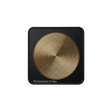
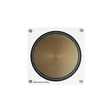
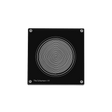
This is the gap our devices are built to close. The V1 Classic is the simplest entry point, tuned to a fixed 7.83 Hz and designed to sit quietly on a nightstand. The V2 Pro and V3 Max open up a fully programmable range, from 0.1 up to 999.99 Hz, for people who want to experiment beyond the baseline Schumann frequency. We won't pair specific frequencies with specific outcomes here.
That kind of claim shows up a lot in this space, and we don't have controlled research to back it for any device, ours included, so we'd rather leave the programmable range described as what it is: a wider range to explore, not a menu of proven effects. None of our devices make sound. None of them vibrate. They generate a real, silent electromagnetic field and let it do its work in the background while you sleep, work, or wind down. Every device carries CE, FCC, and UKCA certification, which is more paperwork than most wellness gadgets bother with, and fits how we would rather be seen: as a precision tool, not a vague healing frequency.
We are careful not to promise a dramatic, instant sensation, because that is not what the research supports and it is not what most people experience. What we hear from our community, built across dozens of countries since 2019, is more modest and more consistent: people report feeling calmer, sleeping more deeply, and noticing less of that wired, overstimulated feeling that seems to follow modern life around. If it does not do that for you, the 30 day money back guarantee and 12 month warranty exist so trying it is not a financial risk.
There is also a piece of this that has nothing to do with frequency and everything to do with where the money goes. Every order funds real environmental restoration through our partnership with Greenspark, work that has already protected over a million bees, planted thousands of trees, and helped rebuild coastal kelp forests. It is a small thing to mention at the end of an article about electromagnetic fields, but it is part of why the company exists in the first place: reconnecting people with the natural systems modern life tends to crowd out.

