






The notification pings. Before you finish one email, three more arrive. Your shoulders creep toward your ears, your breathing goes shallow without you noticing, and by evening you’re tired in a way that doesn’t feel like it wants sleep. That’s what modern stress tends to feel like. A steady, low level activation that never quite resolves.
So what actually helps? Some answers have strong evidence behind them, and some, including the idea of resonance or frequency alignment, are newer. We’ll be clear about which is which.
Why Stress That Never Ends Wears You Down
Your autonomic nervous system runs on two gears. The sympathetic branch is the accelerator, built for short bursts of effort. The parasympathetic branch is the brake, responsible for recovery and rest. Healthy days involve plenty of switching between the two.
The trouble starts when the accelerator rarely gets released. Stress researchers have a term for the cost of that, allostatic load, meaning the wear and tear that builds up when stress responses are repeated or prolonged without enough recovery in between. One stressful afternoon does very little damage. Months of constant low grade activation is a different story.
Researchers often track this balance through heart rate variability, the natural variation in the gap between heartbeats. Higher variability generally reflects a nervous system with more room to recover, and lower variability tends to show up under sustained stress. It’s a useful marker, though not a diagnosis of anything on its own.
What the Evidence Actually Supports
Some of the best research on everyday stress is also the least glamorous. It’s about reducing the number of small interruptions your body has to respond to.
In one experiment, participants solved math problems while ordinary phone notification sounds played. The sounds disrupted their performance and shifted heart rate variability, with the clearest effects in teenagers, which suggests even a harmless ping can register as a small physiological event. And in a randomized controlled trial of 111 students, cutting smartphone screen time to under two hours a day for three weeks improved stress, sleep quality, depressive symptoms, and wellbeing compared with a control group. Randomization matters here, because it points to cause rather than coincidence.
Slow, paced breathing has some of the more consistent trial evidence too. A 2023 review of 12 randomized trials found that breathing practices brought small to moderate drops in how stressed people felt, and slow paced breathing is the most studied technique of the lot. It’s free, takes a few minutes, and works through the same vagal pathways that govern recovery.
None of this is exotic. Fewer interruptions, protected downtime, and slower breathing are the best supported levers we have, and anything else belongs alongside them rather than in place of them.
Where Resonance Comes In
Brain activity is rhythmic, and it can be nudged by rhythmic input from outside. That’s called entrainment, and for light and sound it’s well established. Whether very weak extremely low frequency electromagnetic fields, like the Earth’s own Schumann resonance at about 7.83 Hz, can do something similar is a newer and much smaller area of research.
There is one peer reviewed trial worth knowing about. In 2022, researchers in Taiwan published a randomized, double blinded study of 40 adults with insomnia, comparing a Schumann resonance sleep device with a placebo device over four weeks. The active device group improved on both objective sleep measures and sleep questionnaires, while the placebo group improved only on some of the questionnaire measures.
It’s an encouraging result, and like any single study it’s best read as a starting point. It focused on sleep rather than stress, it involved a modest group of people, and it came from one research team. Larger studies will tell us a lot more.
Research on frequency and everyday stress is at a similarly early stage. The science is promising and still developing, which is why we’d suggest treating a device like ours as one part of a calmer routine rather than a fix on its own.
Bringing a Natural Signal Back Indoors
For almost all of human history, people lived inside a steady, faint electromagnetic backdrop that included the Schumann resonance. Modern rooms add a lot on top of that, from wiring and routers to the devices we carry around all day.
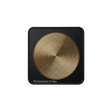
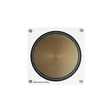
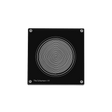
The idea behind The Schumann is to bring one coherent, natural reference signal into the room. The V1 Classic produces a continuous, silent 7.83 Hz field. There’s no sound and no vibration, so there’s nothing to feel in the moment, much like a phone signal you can’t sense but that’s there anyway. The V2 Pro and V3 Max are programmable across wider ranges for people who want to experiment with their own routine.
What people tell us is that they feel calmer and find it easier to wind down in the evening. That’s an experience people report, and it varies from person to person. It isn’t a promise, and it isn’t a substitute for the habits above.
A Reasonable Way to Use It
If you’re curious, the sensible approach is to treat a device like this as one cue inside an evening routine that’s already doing the heavy lifting. Silence the notifications you can live without. Pick a time after which you stop checking messages. Dim the lights, slow your breathing for a few minutes, and let the environment signal that the day is ending. A steady background field can sit alongside all of that, in the same way a warm lamp or a consistent bedtime does.
Give it a few weeks, pay attention to how you feel, and keep your expectations grounded. If it helps, great. If your stress feels heavy, persistent, or hard to shake, that’s worth bringing to a doctor or therapist.

