









Most "smart home" content is really about convenience. Lights that dim on schedule, thermostats that learn your habits, speakers that answer questions. None of that has much to do with how your home actually affects your nervous system.
Frequency management is a different question. It's not about automating your house. It's about what your house is doing to you electromagnetically while you sleep, work, and unwind in it, and whether that environment is helping or working against you.
Your Home Is Full of Invisible Signals, Whether You Notice Them or Not
Every router, phone, laptop, and smart plug in your home is putting out an electromagnetic field. You can't see it or hear it, so it's easy to assume it isn't there. But it's there the same way your phone signal is there whether you're looking at your screen or not.
Here's the part most articles on this topic get wrong. They treat "EMF" as one single thing, either dangerous or harmless, and argue about which. EMF is actually a spectrum. The concerning end is high frequency and high intensity, the kind associated with cell towers, dense WiFi networks, and prolonged close contact with devices. The other end of that spectrum is low frequency and non-ionizing, the same gentle range the Earth itself has been producing for billions of years through what's known as the Schumann resonance.
That resonance, first measured by physicist Winfried Otto Schumann in the 1950s, sits around 7.83 Hz and comes from electrical activity in the atmosphere between the Earth's surface and the ionosphere. Humans evolved inside that field. Modern buildings, especially ones packed with concrete, steel, and wireless routers, tend to dampen it.
So real frequency management isn't about adding more smart devices to monitor your air. It's about doing two things at once: reducing unnecessary high-frequency exposure where you can, and reintroducing the low-frequency signal your environment used to provide automatically.
What Actually Changes When You Manage Your Home's Frequency Environment
We'd rather be honest about this than oversell it. Nobody flips a switch and feels a dramatic shift. The effect people describe, and it's a description, not a guarantee, tends to be subtle and cumulative rather than instant. Some notice a calmer nervous system within the first few nights. Others say it takes a couple of weeks before they connect better sleep or steadier focus to the change in their bedroom.
What we hear most often from people who've made these adjustments:
-
Falling asleep faster and waking up less during the night
-
Feeling less "wired" in the evening after a day of screens
-
Sharper focus during work blocks, particularly for people already sensitive to sound and light
-
A general sense that the bedroom feels calmer, even if they can't say exactly why
None of that is a medical claim, and it shouldn't be treated as one. A Schumann resonance generator is not a treatment for anything. It's an environmental change, closer to blackout curtains or a better mattress than to medication.
A Simple Framework for Managing Your Home's EMF Environment
You don't need a whole-home automation system to do this well. Most of it comes down to a handful of decisions, applied consistently.
Start with your bedroom, not your whole house. You spend more consecutive hours there than anywhere else, and it's the room where nervous system recovery matters most. Move your phone charger away from the bed, switch your router to a lower-power mode overnight if it has one, and keep smart speakers off the nightstand.
Separate your working hours from your recovery hours. High WiFi density, multiple screens, and constant notifications are fine for a focused work block. They're not what you want surrounding you for the eight hours after. A lot of people never draw that line, which is part of why "always on" fatigue feels so hard to shake.
Reintroduce the natural signal deliberately. This is the part most smart home advice skips entirely, because it's not about removing anything, it's about adding something back. A Schumann resonance generator recreates that 7.83 Hz field passively in the background. It doesn't make sound or vibrate. There's nothing to switch on and immediately feel, the same way you wouldn't feel your phone's signal turn on. It just exists in the room, running quietly while you sleep or work near it.
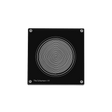
Shield the sources you can't remove. Some EMF exposure is unavoidable. You still need WiFi, you probably work near a laptop most of the day, and your phone isn't going anywhere. For the devices you're in close, constant contact with, something like an EMF shield sticker is a low-effort way to reduce that closer-range exposure without changing how you actually use your devices.
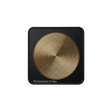
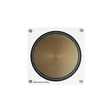
Match the device to how you actually live. The V1 Classic runs a fixed 7.83 Hz signal and works well as a straightforward bedside addition if you want the simplest possible entry point. The V2 Pro covers a wider programmable band for people who want to experiment with different frequencies for focus versus recovery. The V3 Max is built for larger rooms and people who want full control over the spectrum, not just the baseline Earth frequency. If you're not sure which fits your space, the device comparison page breaks down the differences without the sales pitch.
The Placebo Question, Answered Honestly
If you've read anything about frequency devices, you've probably wondered whether the effect is just placebo. It's a fair question, and we're not going to pretend we can rule it out entirely for every person.
What tends to move that conversation forward is the pets angle. Anxious dogs settle. Cats gravitate toward the room with the device running. Pets sleep longer. Animals don't know what a Schumann resonance generator is supposed to do, so they have no expectations to fulfill. That doesn't prove anything scientifically, but it's a genuinely useful data point when someone asks whether this is "all in your head."
Certification Matters More Than Marketing Language
A lot of frequency and wellness products lean on vague words like "healing" or "revolutionary" instead of actual specifications. That's worth being skeptical of. Look for devices that are CE, FCC, and UKCA certified, which means they've been tested against real electromagnetic compatibility and safety standards rather than just described that way on a product page.
It's also worth checking whether the company stands behind the product with something concrete, not just a satisfaction guarantee in name only. A real return window and warranty tell you more about how a company feels about its own product than any amount of copy does.
Building the Habit, Not Just Buying the Device
Frequency management works best as a routine, not a one-time purchase. The households that notice the biggest difference are usually the ones that treat it like they'd treat any other environmental habit, similar to keeping the bedroom dark or cool. The device runs quietly in the background. The phone stays off the nightstand. The WiFi drops to a lower setting overnight. None of it is dramatic on its own, but together it adds up to a home that's actively working with your nervous system instead of against it.
If you're not sure where to start, the frequency library breaks down which ranges are typically used for sleep, focus, and calm, and the frequency quiz can help match a starting point to your space and routine. Either way, start with the room where it matters most, and build outward from there.

