










There is a specific feeling that shows up in early September. The air changes a little. School supplies show up in every store window, even if you have not bought a notebook in twenty years. You catch yourself thinking about earlier bedtimes, cleaner meals, a calmer desk. None of that is random, and none of it requires a new year on the calendar. It has a name, and it has been studied.
The Fresh Start Effect Is Real, and It Is Not About January

Behavioral scientists call it the fresh start effect. The idea comes from a well known study by researchers at the Wharton School, who tracked Google searches, gym visits, and personal goal commitments around dates that felt like beginnings. New weeks, new months, birthdays, the start of a semester. In each case, the researchers found that people were noticeably more likely to act on a goal right after one of these dates than on an ordinary Tuesday in the middle of a stretch of nothing. People were about a third more likely to go to the gym at the start of a new week, and closer to half again as likely at the start of a new semester.
The mechanism is simple once you see it. A date that feels like a landmark creates distance between "past you" and "current you." The missed workouts, the late nights, the takeout containers stacking up by the sink, all of that gets filed under a previous chapter. The new chapter gets a clean page. You are not fighting your old habits anymore. You are just starting fresh, which is a much easier place to begin from.
This is why September works so well for a habit reset even though it is not the calendar new year. For most adults, September has been wired into the brain since childhood as the start of something. New classes, new schedules, new routines built around a school calendar. Even people who left school decades ago, and people who never had kids in school at all, still feel that pull every autumn. The landmark does not care whether you are actually going back to class. It only cares that the date feels like a beginning.
Your Body Is Also Recalibrating, Not Just Your Motivation
The psychology is only half the story. September also lines up with a real shift in daylight and structure that your nervous system responds to whether you plan for it or not.
As the days get shorter, your circadian rhythm, the internal clock that governs sleep and wakefulness, gets less morning light to work with. Light exposure is one of the strongest signals your body uses to time itself. Less of it, and later sunrises, tend to nudge people toward slightly later, looser sleep patterns over the summer. September tends to reverse that. Earlier alarms, more structured days, and a return to routines that were loose in July all push sleep timing back toward something steadier. Sleep researchers note that consistent light exposure and a regular schedule are two of the most reliable ways to keep the body's clock aligned, and September naturally hands people both.
Put the psychology and the biology together and you get a month where your motivation and your body clock are both pointing in the same direction. That is a rare alignment. It is worth using.
What This Actually Means for Your Routine

Here is the part that gets missed in most "new season, new you" content. The fresh start effect is powerful, but it is also short. Motivation spikes right after a landmark date and then fades over the following weeks unless something anchors it. Researchers who study goal pursuit have found this pattern again and again. The surge is real. The staying power is the harder problem.
So the smartest way to use September is not to declare an entirely new life. It is to pick a small number of specific, repeatable actions and let the landmark carry you into them, rather than trying to overhaul everything on September 1st and burning out by September 20th.
A few ways that tends to work in practice:
-
Anchor one habit to a fixed time of day instead of "whenever." A 10pm wind down beats a vague intention to "sleep better."
-
Attach the new habit to something you already do without thinking, like brushing your teeth or making coffee, so it borrows momentum instead of needing its own.
-
Pick one thing, not five. The research on fresh starts is about motivation for a goal, not motivation for an entire personality overhaul.
None of this is about willpower. It is about timing the request you are making of yourself so that your brain is already leaning in the right direction when you make it.
Designing an Environment That Reinforces the Reset
Rituals stick better when the environment supports them instead of fighting them. A bedroom that still runs on July's habits, phone within reach, no wind down cues, harsh light until the moment the lamp goes off, works against whatever new bedtime you set for yourself. A desk buried under summer clutter works against the focus routine you are trying to build.
This is where the environment angle earns its place, and it is also where a lot of self-care advice gets vague. Concrete beats abstract. Move the phone charger out of the bedroom. Set one lamp to warm light for the last hour before bed instead of overhead light. Clear one surface, even a small one, so the space signals "this is where I focus" rather than "this is where mail goes to die."
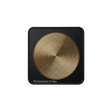
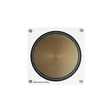
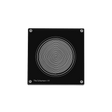
Some people build one more layer into that environment. The Schumann makes a small device that runs quietly in the background of a room, emitting the same natural low frequency field the Earth has always produced, at 7.83 Hz. It is not an audio product and there is nothing to hear. People who use it report feeling calmer and settling into sleep more easily, alongside the other routine changes they are making, not instead of them. Think of it the way you would think of a good lamp or a clean desk. It is one small, quiet piece of an environment built for the reset you are already trying to make, not a shortcut around doing the work.
The Honest Version

September will not fix a routine on its own, and no single September gimmick will either. What the research actually shows is narrower and more useful than that. A landmark date gives you a real, measurable window of extra motivation. Shorter days and a return to structure give your sleep timing a real, biological nudge in a helpful direction. Neither one lasts forever, and neither one does the work for you.
Used well, that window is enough to install one habit that outlasts the month. Used carelessly, it becomes one more forgotten resolution by mid October. The difference usually comes down to picking something small enough to actually keep, anchoring it to a specific time and cue, and building an environment, from your bedtime to your desk to the small things running quietly in the background, that makes the easier choice the automatic one.
September is not magic. It is just a moment when your motivation and your biology happen to agree with each other. That is rare enough to be worth using well.

