










Search "wearable frequency technology" and you will find two very different products wearing the same marketing language. One category tracks your body and adjusts something based on what it sees. The other emits a field and hopes your body notices. Most articles on this topic blur the two together, which is how you end up with wristbands claiming clinical results that were never tested on a wristband at all.
We build frequency devices for a living, just not wearable ones, so we have a fairly informed and fairly biased view of this space. Here is the honest version.
Two Categories, Not One
The first category is biometric wearables. Think rings and bands that track heart rate variability, temperature, and sleep stages, then use that data to nudge you toward recovery, whether through a vibration, an app prompt, or a paired audio track. These devices do not generate a field. They measure you and respond.
The second category is electromagnetic or PEMF wearables, patches, clip-ons, and bands that emit a low-frequency pulsed field directly against the skin. This is closer to what people usually mean by "frequency technology," and it is where most of the confusion sits.
PEMF itself is not new or fringe. It has been FDA cleared for bone healing since 1979, and hospitals use full-size PEMF equipment for specific orthopedic and wound-care applications. What is newer is squeezing that same principle into something small enough to clip to a belt or wrap around a wrist. Engineers have made real progress here. IEEE published research in 2026 on flexible printed-circuit PEMF coils thin and light enough to wear comfortably, which is a genuine hardware improvement over the bulky clinical units this technology started with.
What the Research Actually Supports
This is the part most wearable frequency brands skip, so we will not.
Clinical PEMF research, the kind that led to FDA clearance, was conducted on stationary, full-power devices for specific conditions like bone non-union, not on the miniaturized, low-power wearables sold to consumers today. Shrinking a coil down to wristband size usually means shrinking the field strength too, and that tradeoff rarely makes it into the marketing copy.
Schumann resonance specifically, the 7.83 Hz signal our own devices are built around, has a thinner peer-reviewed base than the broader PEMF research once you leave the lab. Most of what exists rests on plausibility rather than a deep stack of clinical trials, and we would rather say that plainly than dress it up. We think the plausibility case is genuinely strong. Every human who has ever lived was immersed in this field before electric lighting and Wi-Fi came along, so recreating it indoors is less a novel intervention than a return to a baseline our bodies evolved inside of. But plausibility is not proof, which is exactly why our language stays in what users report rather than what we can promise.
None of this means these devices do nothing. It means the claims should match the evidence, not outrun it
Why We Started in the Room
People ask us this often enough that it deserves a straight answer.
A room-based device and a wearable solve different problems, and we started with the room on purpose. Ours plugs into a wall and fills the space around you, so it can run in the background for the hours you are actually sleeping, working, or winding down, which is when most of our customers say the effect matters most. A wearable trades some of that steady, whole-room coverage for something you can take anywhere, which is a real advantage a plugged-in device does not have.
Neither form factor is the right one in the abstract. If you travel constantly and want something in your pocket, portability wins. If you spend most nights in the same room, a passive device that just runs in the background wins. They are answers to different questions, and we chose to answer the room question first.
The Same Misconceptions Keep Showing Up
Whether the device sits on your wrist or on your nightstand, we hear the same handful of questions on repeat.
"It must make some kind of sound." It does not. Electromagnetic fields are not audio, and there is no vibration or hum to notice, which trips people up because "frequency" usually makes them think of binaural beats or meditation tracks. This is a different mechanism entirely, closer to your phone's signal than to anything you can hear.
"I don't feel anything, so it must not be working." There is nothing to physically feel, on a wearable or off one. The field is present whether you sense it or not, the same way your phone's signal exists in the room whether your phone is buzzing or sitting silent.
"Isn't this just placebo?" We cannot rule that out for every user, and no honest brand can. What complicates the placebo explanation is that pets respond too. Owners of anxious dogs and cats regularly report calmer behavior around these devices, and animals do not know what a wellness trend is supposed to feel like.
"EMF is dangerous." EMF covers a huge range, and the safety concerns cluster at the high-frequency, high-intensity end, cell towers, routers held against your head for hours. Low-frequency fields at the intensity these devices produce sit at the opposite, gentle end of that spectrum, the same end the Earth itself has produced for billions of years.
What to Actually Check Before You Buy One
Skip the percentage stats and the stock photos of glowing wristbands. Check these instead.
-
Does the company publish the actual field strength, not just a vague "clinically calibrated" claim?
-
Is the device certified (CE, FCC, or similar), not just described as "engineered"?
-
Can you return it if it does nothing for you? A real money-back window tells you more about a brand's confidence than any testimonial does.
-
Does the language stay in "users report" territory, or does it slide into "cures" and "treats"? The second one is a legal and credibility red flag.
-
Is the frequency claim specific and consistent, or does the same page mention 7.83 Hz, alpha waves, and theta waves as if they are interchangeable?
That last point matters more than it sounds. Different frequencies target completely different things, and a page that mixes them casually usually has not thought hard about either one.
Where This Leaves You
Wearable frequency technology is a real, improving category, not a scam and not a miracle. Biometric wearables are genuinely useful for understanding your own patterns. PEMF wearables are a legitimate engineering achievement built on a real, if narrower than advertised, evidence base. Neither deserves the inflated stat sheets that circulated a couple of years ago, and neither is required to make an environment-based approach worth trying instead.
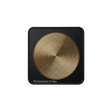
If portability matters most to you, a wearable is the right call. If you are usually in the same room at the same time each night, it is worth looking at what a passive, room-based device like The Schumann V1 Classic does differently, and reading through how the field actually works before you decide either way. Either path is reasonable. What is not reasonable is a device, worn or plugged in, that promises more than the current research can back up.

