









You sit down, close your eyes, and try to follow your breath. Ten seconds in, you're thinking about an email. You catch it, come back, and thirty seconds later you're planning dinner. This isn't a personal failing. It's just what an untrained mind does, and it's the reason most people quit meditation before they ever feel the version of it that gets talked about online.
There's a newer conversation happening around why some environments make that settling easier than others, and it centers on a real, measurable phenomenon most people have never heard of. It's called the Schumann resonance, and it's the reason we named this company after it.
Your Brain Already Runs on Frequency
This part isn't controversial. Neuroscience has mapped brain activity into frequency bands for decades. Beta waves (roughly 13 to 30 Hz) show up when you're alert and thinking actively, the state most of us live in from the moment we check our phone in the morning. Alpha waves (about 8 to 13 Hz) show up during relaxed, unfocused awareness. Theta (4 to 8 Hz) shows up in the drowsy space just before sleep, and in the deeper stretches of meditation. Delta (under 4 Hz) is mostly associated with deep sleep.
Meditation, in large part, is the practice of nudging your brain out of beta and into alpha or theta on purpose, while staying conscious enough to notice it happening. That's genuinely hard. Your brain has momentum, and it wants to stay exactly where it usually sits.
What the Schumann Resonance Actually Is
The Earth's atmosphere behaves like a giant, low frequency cavity. Lightning strikes around the planet, roughly 50 per second, and the electromagnetic energy from those strikes gets trapped between the Earth's surface and the ionosphere. That trapped energy settles into a set of standing wave frequencies, the strongest of which sits at about 7.83 Hz. This was predicted mathematically by physicist Winfried Otto Schumann in the 1950s, which is where the name comes from, and it's been measured continuously ever since. It's not a wellness marketing term. It's a documented feature of the Earth's electromagnetic field.
What's interesting, and honestly what got our founder Tim curious in the first place, is where 7.83 Hz sits. It falls right on the boundary between theta and alpha, the exact range meditators spend years training themselves to access.
So Does It Actually Help You Meditate?
Here's where we want to be straight with you, because we'd rather earn your trust slowly than lose it with a bold claim.
Neural entrainment, the idea that brain activity can sync toward an external rhythm, is a real area of study. It's best documented with light (photic driving) and sound (binaural beats), where the evidence is reasonably solid. Entrainment through a weak, silent electromagnetic field is a newer and much thinner body of research. A small 2025 pilot study out of Nova Southeastern University looked at skin blood flow and pulse changes in six volunteers exposed to a 7.8 Hz magnetic field and found measurable physiological shifts worth investigating further. That's promising groundwork, not proof. We're not going to tell you a study with six participants settles the question, because it doesn't.
What we can tell you is what our customers report, consistently, across thousands of orders since 2019. People say sessions feel easier to settle into. They say the restlessness that usually shows up around minute three doesn't arrive as fast, or arrives and passes more quickly. Some describe it as meditating with a light tailwind instead of a headwind. That's a real pattern in the feedback, and it's also subjective, which we're not going to dress up as clinical proof.
If you want the honest version of the pitch, it's this. Your brain does the actual work of meditating. A calm, stable electromagnetic environment, similar in principle to the one every meditation tradition on Earth developed inside of, may make that work a little less uphill. We think that's worth trying, especially with a 30 day money back guarantee sitting behind it.
The Placebo Question, Answered Directly
People ask this a lot, and we'd rather answer it than dodge it. Could some of the reported calm be placebo? Yes, and we won't pretend otherwise for anyone. Expectation shapes experience, especially with something as subjective as a meditation session.
What complicates the simple placebo explanation is the pets angle. We hear this constantly from customers: anxious dogs settle near the device, cats seem drawn to the room it's in, and older pets sleep longer once it's running. Animals don't know what a Schumann resonance generator is supposed to do, and they have no expectations to fulfill. Make of that what you will. We find it interesting enough to keep bringing up.
Building a Frequency-Supported Practice
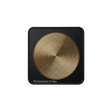
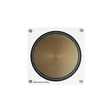
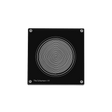
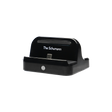
If you're using our devices as part of a meditation routine, here's roughly how our team and long-time customers tend to set things up. The V1 Classic runs on a fixed 7.83 Hz and works well as a constant background layer, on through the whole session and often left running in the room beyond it. The V2 Pro covers a wider band and lets you choose a starting point depending on the kind of practice you're doing.
A few starting points people find useful, based on internal testing and customer feedback rather than any promise of a "correct" setting:
-
Simple breath focused sitting: 8 to 10 Hz, closer to alpha, tends to suit shorter or beginner sessions.
-
Open awareness or body scan practice: 6 to 8 Hz, into the theta range, for a slower, deeper feel.
-
Wind-down before sleep meditation: the V1 Classic's fixed 7.83 Hz alone, kept simple.
None of these are fixed rules. Frequency response is personal, the same way two people can do the same yoga class and feel completely different things afterward. Most people land on a setting through a few weeks of paying attention, not by following someone else's protocol exactly.
Setting Up the Space
The field these devices generate is gentle, closer in strength to what you'd find outdoors than to a router or a phone. That means placement matters. Keep the device within about three to six feet of where you sit. If you can, switch your Wi-Fi router off during the session, or at least move it to another room, since it's putting out electromagnetic noise in a completely different, much stronger range.
Consistency does more than any single session will. Customers who use a device most days for several weeks tend to report that settling into a calmer state starts happening faster, with or without the device running that particular day. That's a pattern worth paying attention to, even without a controlled study to back it up.
What We Won't Claim
We're not a medical device, and we're not going to tell you frequency exposure treats anxiety, cures insomnia, or replaces years of meditation training. What we've built is a tool that supports an environment, silent and invisible, similar to the one every contemplative tradition on the planet developed inside long before buildings, wiring, and Wi-Fi got in the way. Whether that helps you personally is something you'll know faster than any article can tell you, which is exactly why we back every order with a 30 day guarantee and a 12 month warranty. Try it, sit with it, and trust what you notice.

