
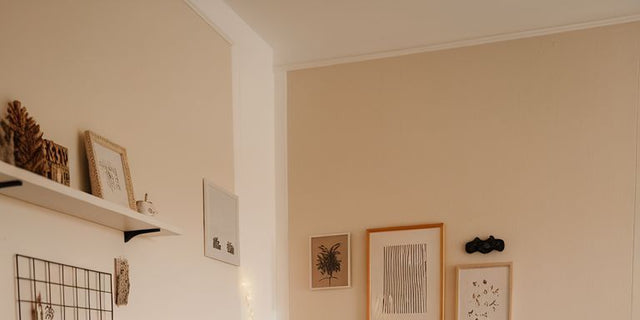









Most people treat a room like it only has one setting. The bedroom is for sleep, the desk is for work, and whatever happens in between just happens. But environmental psychologists tend to think about a room differently. To them, a space is closer to a stage set. The furniture stays the same, but the lighting, the sound, and the clutter level can be adjusted to change what the room is actually asking your brain to do.
That is a useful way to think about self-care this fall. You do not need three different rooms to sleep well, focus well, and calm down well. You need one room that knows how to switch jobs, and a few small, specific levers that switch it.
This is not another sleep hygiene article. Sleep gets a section here, but only one of three, because the room's job does not stop once the lights go off. It has a day shift and an in-between shift too, and each one runs on different science.
Job One: The Night Shift
Sleep is the job most people already associate with their bedroom, so this section stays short on purpose. The one piece worth understanding well is light, because it does more work than almost anything else in the room.
Light is one of the strongest signals your body uses to time itself. Bright light during the day supports a healthy wake cycle, while too much light in the evening interferes with melatonin, the hormone that helps you fall and stay asleep. Sleep researchers note that low, warm-toned lighting in the hour before bed, paired with a genuinely dark room once you are actually trying to sleep, supports the kind of melatonin timing that makes falling asleep easier.
In practice, that means the room's night setting is mostly about subtraction. Dim the overhead light and swap it for something small and warm. Keep screens out of the last half hour before bed, since their light works against the exact signal you are trying to send. Blackout curtains do more than any supplement ever will. None of this is new advice, but it is the one lever in this article that is genuinely non-negotiable, so it earns its short section.
Job Two: The Day Shift
Here is where the room's second job starts, and it has almost nothing to do with sleep. During the day, the same space needs to support sustained attention, and the research on what disrupts that attention points somewhere people rarely look: the visual field itself.
Every object in view competes for a small amount of the brain's attention, whether you consciously notice it or not. A Princeton-affiliated study on classroom and workspace distraction found that clutter measurably affects how well people can concentrate on a task, because the brain has to keep filtering out everything that is not the task. The more stimuli in the room, the more filtering the brain is quietly doing in the background, and that filtering has a cost.
This does not mean the desk needs to be empty. It means the desk needs to be edited. One clear surface, with only what the current task actually requires, asks less of the brain than a desk with three unrelated projects visible at once. Background noise works the same way. A single unpredictable sound, like a notification or a conversation in the next room, pulls attention away from a task far more than a steady, low hum does, which is part of why so many people focus better with consistent background sound than with silence that keeps getting interrupted.
The day job of the room, in other words, is not about adding motivation. It is about removing competition.
Job Three: The In-Between Shift
This is the job most self-care content skips entirely, because it does not fit neatly into "sleep tips" or "productivity tips." It is the shift where the room helps your nervous system come down from a stimulating day without needing to be asleep yet. Late afternoon, right after a hard meeting, the hour between finishing work and actually relaxing. That transition needs its own environmental cues, separate from the ones that put you to sleep at night.
The research here is less about any single fix and more about a pattern. A well known study out of UCLA had people describe their own homes on tape, then tracked their cortisol, the body's main stress hormone, over the following days. Researchers found that people who described their homes using more cluttered, unfinished language showed less healthy day to day cortisol patterns than people who described their homes in calmer, more restorative terms. The home itself was not the variable. How stressful the space felt to live in was.
That points to something practical. The in-between shift of a room is less about one big change and more about consistent, low-stimulation cues that tell your body it is safe to downshift. A tidy surface where you land after work. Soft, warm light instead of the overhead bulb that has been on since 8am. A glass of water within reach instead of a screen. Small, ambient signals that are easy to repeat every day, because consistency is what makes a cue actually mean something to your nervous system over time.
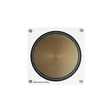
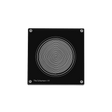
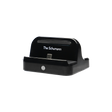
This is also where a device like The Schumann tends to fit, not as a fix on its own, but as one more environmental cue running quietly in the background alongside the lighting and the water glass. It emits a low, silent electromagnetic field rather than sound, so there is nothing to hear or feel directly. People who use it report feeling calmer during exactly this kind of transition, as one part of a room that is already doing the rest of the work through light, noise control, and a bit less visual chaos.
Same Room, Three Settings
None of these three jobs require different furniture or a bigger apartment. They require the same handful of levers, adjusted differently depending on what time of day it is and what the room needs to be doing.
-
Night: dim, warm light, a genuinely dark room, screens away from the bed.
-
Day: one clear surface, steady background sound instead of unpredictable noise, only the current task in view.
-
In-between: consistent low-stimulation cues, tidy surfaces, and a quiet signal, whether that is light, water, or something like a background frequency device, that tells your body it is time to come down.
The room is not three rooms. It is one room that has learned to switch jobs, using the same light switch, the same desk, and the same small daily habits, just aimed at a different goal depending on the hour.

