
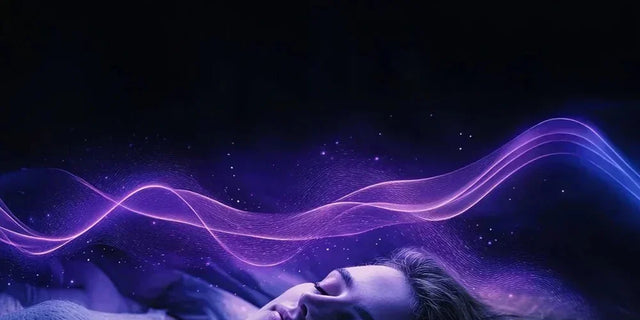








You'll spend roughly a third of your life asleep. Live to 80, and that's close to 27 years spent unconscious, which makes it strange how little most of us think about what's actually happening during those hours. Sleep isn't your brain switching off. It's a structured, repeating sequence of distinct stages, each doing different work, each measurable on an EEG, and each vulnerable to disruption in its own way.
Sleep architecture, the specific pattern and proportion of stages your brain cycles through each night, shapes almost everything downstream: memory, mood, immune function, physical recovery, even how sharp you feel by mid-morning. Understanding that architecture, and what actually supports or disrupts it, is a better starting point than any single sleep hack.
The stages, briefly
Sleep unfolds in cycles of roughly 90 minutes, repeating several times a night, each one moving through the same broad stages (the National Institutes of Health has a clear overview here):
N1 (light sleep). A brief transition, often just a few minutes, where brain activity slows from the alert beta range into alpha and then theta waves. Easy to wake from, and not especially restorative on its own.
N2 (light sleep). More stable than N1, marked by brief bursts of fast activity called sleep spindles and sharp waveforms called K-complexes. This stage typically makes up close to half of total adult sleep time and plays a role in memory consolidation.
N3 (deep, slow-wave sleep). Dominated by delta waves, the slowest brain wave frequency (roughly 0.5 to 4 Hz). This is where the most physical restoration happens: growth hormone release, tissue repair, and the glymphatic system's overnight clearance of metabolic waste from the brain. N3 is concentrated earlier in the night and shrinks as morning approaches.
REM sleep. The dreaming stage, with brain activity that looks surprisingly close to waking activity, paired with temporary muscle paralysis. REM supports emotional processing and memory integration, and REM periods get longer as the night goes on, which is why your most vivid dreams tend to land right before you wake.
Disrupt any one of these stages consistently, whether through stress, screens, alcohol, or an erratic schedule, and the effects show up the next day: foggier thinking after too little N3, flatter mood and worse emotional regulation after too little REM.
Where entrainment comes in
Brain waves aren't static. They shift in response to what's happening around you, including, under the right conditions, external rhythmic input. This is called entrainment, the same basic principle behind two pendulum clocks on a shared wall gradually swinging in sync. It's well established that rhythmic light and sound can nudge brain activity toward a matching frequency, which is the mechanism behind things like binaural beats and light-based sleep aids.
Whether the same holds for very weak, extremely low frequency (ELF) electromagnetic fields, like the Earth's own Schumann resonance at roughly 7.83 Hz, is a newer and smaller area of research, but it isn't a fringe question. In 2022, researchers in Taiwan published a randomized, double-blinded trial in the journal Nature and Science of Sleep, comparing a Schumann-resonance sleep device against a matched placebo device in 40 adults with insomnia. Over four weeks, the group using the active device showed measurable improvements on both sleep diaries and overnight polysomnography (objective EEG-based sleep recording), including shorter time to fall asleep and more total sleep time, while the placebo group's improvements were limited to self-reported measures. It's one study, from one research group, and the authors themselves note that the underlying mechanism needs further work to understand. We think that's the right amount of confidence to have in it: a genuinely interesting, peer-reviewed data point, not proof of a universal effect.
The frequency your bedroom is probably missing
For essentially all of human history, sleep happened inside a fairly constant electromagnetic backdrop, dominated by Earth's own field and the steady 7.83 Hz Schumann resonance produced by lightning activity circling the globe. That frequency sits right at the boundary between theta and alpha brain wave ranges, which is part of why some researchers find it a plausible candidate for a biologically relevant background signal, though this connection remains an area of active study rather than settled fact. It's worth being clear that this is a different question from the delta activity that defines N3 above. The Schumann resonance is not a deep-sleep frequency, it's a background one, and the research question is whether a coherent ambient signal at that frequency supports the conditions sleep happens in, not whether it substitutes for the mechanisms that actually produce deep sleep.
Modern bedrooms look nothing like that ambient environment. Steel-reinforced concrete and dense electrical wiring attenuate Earth's natural field the way a Faraday cage would. In its place, a typical bedroom adds a Wi-Fi router, a phone on the nightstand, a smart speaker, and whatever else is charging nearby, none of which shares any relationship with the frequencies your brain uses during sleep. None of that is necessarily harmful in the acute sense, radiofrequency signals at normal household exposure levels don't heat tissue or cause direct damage, and the International Commission on Non-Ionizing Radiation Protection sets exposure guidelines with that in mind. The more interesting question isn't whether these signals are dangerous. It's whether a bedroom that's added a dozen artificial frequencies while losing the one natural one is still a coherent electromagnetic environment for sleep, or just a noisier one.
What restoration actually looks like
This is the premise behind The Schumann's approach to sleep: rather than trying to strip every artificial signal out of the bedroom (unrealistic for most people, and not something a small consumer device can actually do), add back a coherent signal that's been filtered out.
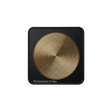
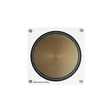
It's worth being precise about what that means for each device, since the frequency question actually points in two different directions. The V1 Classic runs a continuous 7.83 Hz field, which sits at the theta-alpha boundary, not inside the delta range that defines N3. We're not suggesting the V1 pushes your brain directly into deep sleep. What it restores is the steady ambient signal the room lost entirely, the coherent background tone bedrooms existed inside for most of human history, rather than a frequency chosen to match any single sleep stage. It's silent, meant to sit on a nightstand and be left alone, with no sound or vibration to feel directly, the same way you don't feel your phone's signal even though it's there. People who use it commonly describe falling asleep a little more easily and waking up feeling less groggy, though as with any wellness product, individual experience varies, and we'd rather say that plainly than promise a specific result.
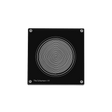
If you want the added frequency to sit closer to the range this article actually spends most of its time on, the V2 Pro and V3 Max are programmable further down the spectrum, into the low end where delta activity lives. That's genuinely newer, less studied territory than the ambient resonance research above. We don't have a controlled sleep study on a device tuned specifically to delta-range frequencies the way we do for 7.83 Hz, so it's worth treating as a reasonable direction to experiment with rather than a proven one. Some people use a lower setting in the evening as part of winding down and a different range earlier in the day, there's no single required approach, and the store always has the current specs if you want to get precise.
Sleep is the foundation, not a side project
It's worth stepping back to why any of this matters. Sleep quality doesn't sit in its own lane, separate from the rest of your health. Poor sleep architecture, chronically shallow N3, fragmented REM, shows up in worse next-day focus, a harder time regulating mood, slower physical recovery, and, over the long run, associations with broader metabolic and immune strain that sleep researchers have documented extensively. None of that means one device fixes all of it. It means the environment you sleep in is worth taking seriously, alongside the more familiar basics: consistent timing, a dark room, less screen time before bed, and less caffeine late in the day.
Frequency restoration isn't a replacement for any of that. It's one more lever, grounded in a real if still-developing area of research, aimed at giving your brain back a signal it's had access to for its entire evolutionary history and that most modern bedrooms have quietly filtered out.

