







Stand in a typical living room in 2026 and count the invisible signals passing through it. The Wi-Fi router. The mesh extender in the hallway. Every phone, laptop, and tablet in the house. The smart speaker listening for a wake word. The video doorbell, the thermostat, the robot vacuum, the smartwatch on your wrist, the earbuds charging on the nightstand. Add a 5G small cell down the street and a neighbor's entire smart home doing the same thing next door, and the picture is clear: we live inside more electromagnetic activity than any generation before us, and the number of connected devices in the average home keeps climbing every year.
The instinct that follows is a familiar one: block it. Shield the bedroom. Wear something that claims to neutralize radiation. Buy a sticker for the back of the phone. Create an electromagnetic-free zone to retreat to. It is an understandable response to a real feeling of overexposure. But it is also the wrong response, and it misses what actually made humans well before any of this technology existed.
The Schumann's approach starts from a different premise: the fix for a noisy electromagnetic environment is not to remove every signal in it. It is to restore the one signal your biology has never been without, and let that steady reference point do the work.
Fields aren't the enemy. Your biology runs on them.
Electromagnetic activity isn't foreign to the body, it's foundational to it. Every nerve impulse is an electrical signal. Every heartbeat generates a measurable field. None of that is new or artificial.
What is relatively new is the environment we've built around that biology. For as long as life has existed on Earth, it has developed inside a specific, constant electromagnetic backdrop: the planet's magnetic field, and a subtler, steady pulse called the Schumann resonance. Lightning strikes roughly a hundred times a second worldwide, and the resulting electromagnetic waves get trapped between the Earth's surface and the ionosphere, reinforcing each other at a fundamental frequency of about 7.83 Hz. NASA describes it as a kind of atmospheric heartbeat, present continuously, everywhere on the planet, since long before the first Wi-Fi router was ever switched on.
Modern buildings are unusually good at attenuating that particular signal. Steel reinforcement, wiring, insulated walls, and the general electromagnetic clutter of a connected home all interfere with it. So the question worth asking isn't "how do I block more," it's "what natural signal has my environment already filtered out, and is that worth restoring."
What the isolation research actually shows (and where it's genuinely uncertain)
The most cited data point on this question comes from Rutger Wever's long-running studies at the Max Planck Institute for Behavioral Physiology in the 1960s through the 1980s. Volunteers lived for weeks at a time in an underground bunker in Andechs, Germany, one experimental room fully shielded from natural electric and magnetic fields, the other not. Wever's published results found that subjects in the shielded room showed a shorter, less stable circadian period than those in the unshielded room, and that reintroducing a weak artificial field appeared to help resynchronize their rhythms.
It's worth being honest about what this research is and isn't. It's decades old, it involved a modest number of subjects, and it hasn't been robustly replicated with modern chronobiology methods. Mainstream sleep science today attributes circadian regulation overwhelmingly to light exposure, not electromagnetic fields. What the bunker studies do offer is a genuinely interesting, if narrow, data point: when researchers stripped a room of every natural time cue, including the planet's ambient field, human rhythms didn't hold as steady. That's a reason for curiosity and further study, not a settled verdict, and we think it's more useful to say so plainly than to oversell it.
Space agencies have wrestled with a related, more open question: what happens to physiology once you leave the Schumann resonance behind entirely. It's a question NASA has flagged for further study rather than fully answered. A 2023 white paper submitted to NASA's Biological and Physical Sciences division notes that because the Schumann resonance is so difficult to shield against on Earth, it's genuinely hard to study its absence, and argues that as NASA plans longer lunar missions, the question deserves dedicated research rather than assumption in either direction. In other words: this is an active area of scientific curiosity, not a closed case, and we'd rather point you to that honestly than dress it up as more certain than it is.
Not every field is the same field
Part of what makes blanket "block all EMF" advice unhelpful is that it treats radically different phenomena as one threat. A few distinctions matter:
Frequency. A 7.83 Hz field and a 2.4 GHz Wi-Fi signal are separated by roughly eight orders of magnitude and interact with biological systems through entirely different mechanisms. Extremely low frequency (ELF) fields sit in the same range as the body's own electrical rhythms, radiofrequency fields, the kind your router and phone use, don't.
Intensity. Earth's magnetic field measures roughly 0.5 gauss at the surface. A hospital MRI machine operates at up to 3 tesla, millions of times stronger. Most consumer devices sit far closer to the natural end of that spectrum than people assume.
Coherence. A steady, single-frequency field behaves very differently, biologically, than a chaotic mix of overlapping signals. The body's own rhythms are highly organized, a clear, coherent reference tends to be easier to entrain to than electromagnetic noise.
The International Commission on Non-Ionizing Radiation Protection publishes exposure guidelines precisely because frequency, intensity, and duration all change the picture. There's no honest version of this conversation that treats "EMF" as a single, uniform thing to be feared or blocked outright, and we're wary of anyone who tells you otherwise.
Why shielding backfires
Even setting the research aside, blocking has a practical problem: it's indiscriminate. A shielded room doesn't distinguish between your Wi-Fi router and Earth's ambient field. It removes both. In fully isolated environments, like the shielded rooms researchers use precisely because they're so hard to build, you don't get a calmer version of the natural environment. You get an artificial one with a piece missing.
And unless you're prepared to live somewhere with no wireless signal, no electrical grid, and no neighbors doing the same, full shielding isn't realistic anyway. You can't opt out of the modern electromagnetic environment. You can, however, add something back to it.
Restoration: add the signal back, rather than fight the noise
This is the idea behind The Schumann. Our devices don't attempt to cancel, block, or "neutralize" anything, and we wouldn't trust a small consumer gadget that claimed to. Passive stickers and pendants don't generate measurable fields at all, and no small object can selectively filter some frequencies while letting others through without active electronics most of these products simply don't have.
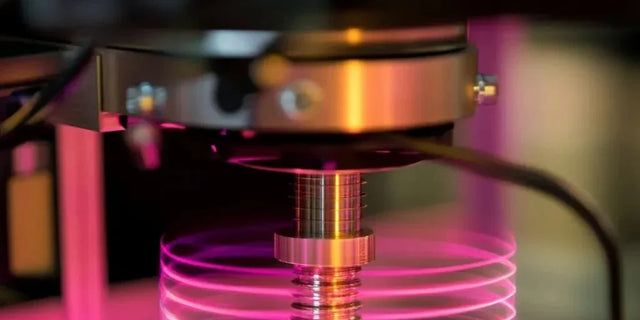
What our devices do is simpler and more honest: they generate a real, measurable, silent electromagnetic field at the Earth's own resonant frequency, so that wherever you place one, that baseline signal is present again, running quietly in the background whether you're aware of it or not. Think of it the way you think of your phone's signal: invisible, constant, and there regardless of whether you can sense it. There's no sound, no vibration, and nothing to feel in the moment. The idea isn't a dramatic switch-flip, it's a steady, cumulative layer added back to a room that modern construction has largely filtered out.
The lineup, and how the pieces fit together
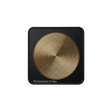
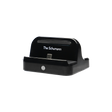
V1 Classic is the simplest entry point: a fixed 7.83 Hz field, silent, and built to sit on a nightstand and be forgotten about. It's the device that carries the "Earth's frequency" story most directly, a straightforward restoration of the one baseline every home is missing.
V2 Pro steps up to a programmable, mid-tier device covering a wider band of frequencies, useful for anyone who wants to move beyond the fixed baseline and experiment with different sessions across the day.
V3 Max is the flagship: fully programmable, with presets you can set once and return to, whether that's a calmer start to the morning or a steadier wind-down before bed. It's built for people who want one device that adapts to different parts of the day, rather than several single-purpose ones, while still resting on the same baseline signal the whole range is built around.
Rounding out the range are accessories, the EMF Nano Shield, which harmonizes a space rather than blocking or shielding anything in it, a frequency-infused water bottle, and a charging station, plus curated bundles for people building out a full setup. For exact specs, current frequency ranges, and pricing, theschumann.com is always the source of truth, since the lineup continues to evolve alongside a next-generation device already on the horizon.
However you build your setup, the principle stays the same across the range: none of it works by blocking anything happening around you. It works by giving your environment back a signal that was always meant to be there.
How to tell real innovation from marketing noise
The EMF wellness category is crowded with products that don't hold up to basic scrutiny. A few honest questions help sort the two apart:
Does it actually generate a field? Many stickers, pendants, and "harmonizing" objects are passive. They cannot create the electromagnetic effects they advertise, full stop.
Is the frequency specific and controllable? Vague claims about "healing frequencies" mean little without a stated, verifiable frequency, ideally one you can measure with standard equipment.
Does the physics make sense? You cannot selectively block some wireless signals while leaving others intact without genuine filtering electronics, and you cannot neutralize a field without generating a counter-field, which requires power and real components, not a passive object. This specific test is aimed at products that claim to block, cancel, or neutralize a field. Harmonizing claims, ours included, are a different category and a different question, since they aren't claiming to remove or counteract anything in the first place.
Are the claims modest? Be skeptical of anything promising to eliminate harmful radiation while simultaneously boosting half a dozen unrelated things at once, all from one small object. Grounded claims tend to be a better sign than dramatic ones.
We'd rather make a specific, modest claim you can verify than an exciting one you can't: our devices generate a real, measurable low-frequency field, at 7.83 Hz on the V1 or a range you control on the V2 Pro and V3 Max, and people who use them commonly report feeling calmer, sleeping more deeply, or finding it easier to wind down. Individual experience varies, and we'd rather say that plainly than promise a specific outcome.
An easy way to see it without a device
If you want a low-stakes way to notice the difference between a coherent signal and electromagnetic noise, watch how a pet responds to a calm room versus a chaotic one. Anxious dogs settle. Cats gravitate toward quiet corners of the house. Pets have no expectations to satisfy and no placebo response to produce, which is part of why so many of our customers first noticed a difference in their animals before they noticed it in themselves.
The path forward is addition, not elimination
The electromagnetic environment isn't going to get simpler. More connected devices arrive every year, 5G and eventually 6G networks continue to densify, and the smart home keeps expanding. Opting out entirely would mean opting out of modern life itself, and even if that were possible, a fully shielded space would strip out the natural baseline along with everything artificial.
The more realistic path is the one we've built The Schumann around: restore what's genuinely missing, in a form your biology already recognizes, rather than trying to fight a battle against wireless technology that nobody actually wins. Not a shield. An environment.
Since day one, every Schumann order has helped fund real environmental restoration through our partnership with Greenspark and their Earthlungs project in Kenya, from protecting bees and planting trees to building beehives and, most recently, restoring coastal kelp forests. It's a small, ongoing part of what an order supports, alongside our 30-day money-back guarantee, 12-month warranty, and free shipping. Current cumulative totals are always kept up to date at theschumann.com.

